Just the Family
November 15, 2026 2026-11-15 2:41
Just the Family
The photographer said, “Just the family now,” and three people stepped away.
One was a neighbour who had come to return a serving spoon. Nobody knew how she had ended up in six photographs. Another was the woman who made the cake.
The third was Aunty Ejiro.
Ireti saw her moving towards the drinks table and nearly called her back.

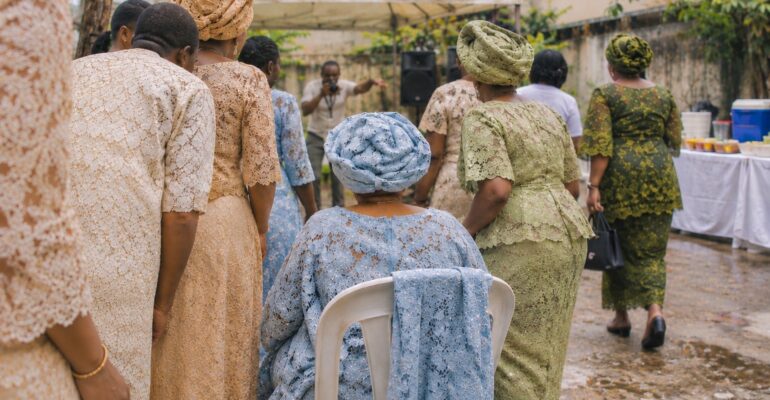
It was her mother’s seventieth birthday, held in the garden of the family house in Surulere. The canopy had survived a brief shower. Somebody had hidden the damp chairs behind the speakers. Her mother sat in the middle of the arrangement in pale blue lace, looking down while a granddaughter untangled the fringe of her wrapper.
“Children and their spouses, please,” the photographer said.
Her eldest brother came forward with his wife, Bose. Her younger sister collected her husband from the small-chops table. Cousins moved in and then were told to move out again.
“Spouses closer. Little ones in front. Somebody take the baby, please.”
Ejiro stayed by the drinks table.
She had married Ireti’s eldest brother before Ireti entered secondary school. For eighteen years she had occupied the end of the dining table nearest the window. She liked the breeze. He complained that the curtain kept touching his food.
The marriage ended nine years ago. He had remarried.
On Thursdays she visited Ireti’s mother to watch a television quiz show. They disagreed loudly with each other and sometimes with the contestants. Once, after an argument about the capital of a country neither had visited, they stopped speaking until the next question.
Ejiro brought plantain chips for those evenings. Ireti’s mother hid the packet whenever someone came in.
“Let them buy their own,” she would say.
“They’re your children.”
“They have salaries.”
For the birthday, Ejiro had suggested the green lace.
“Mummy has worn green before,” Ireti said.
“And did she spoil it?” Ejiro asked.
Her mother chose the blue herself. Ejiro called it too pale, then asked for the tailor’s number because she liked the sleeves.
Now Bose stood beside her husband in front of the flowers. She had been taking photographs since morning and had done half the work of keeping the celebrant away from the kitchen.
Ireti was still looking towards the drinks table.
“Madam, shift to your left.”
The photographer meant Ireti. She moved until her shoulder touched her sister’s.
“Mummy, look up. Everybody, here.”
Her mother lifted her face.
“Smile. One more. Lovely.”
The grandchildren went next. Then the church friends insisted on a horizontal picture because there were twelve of them.
Ireti found Ejiro sitting beside the drinks table, eating small chops from a paper plate.
“You disappeared.”
“They said family.”
“You know what he meant.”
“Yes,” Ejiro said.
She held out the plate. Ireti took a spring roll, although she had already eaten.
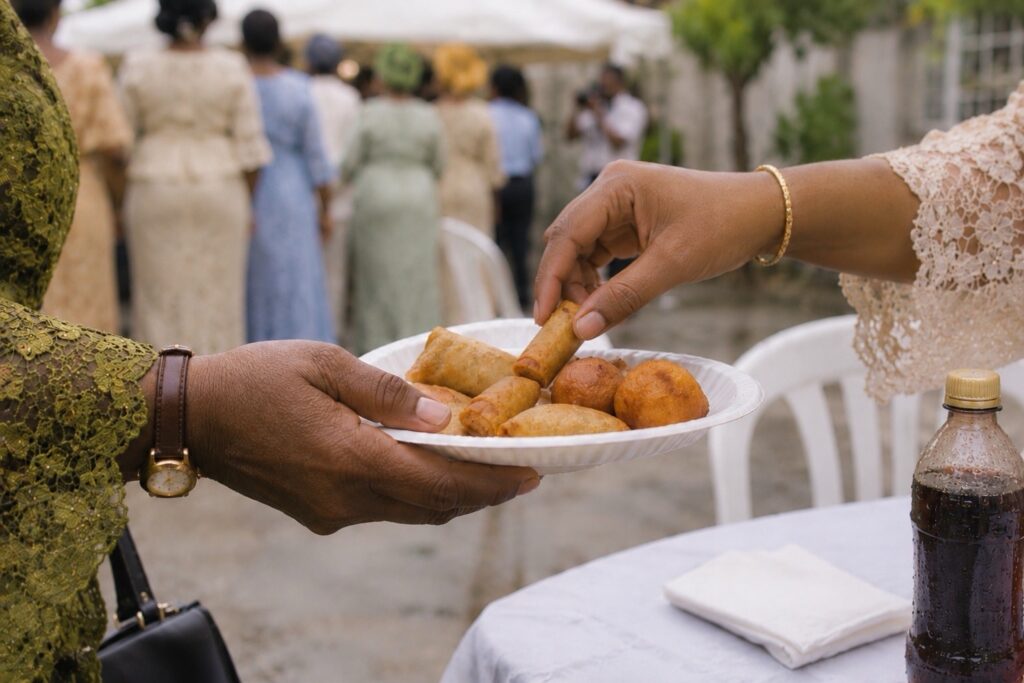
By six o’clock, the canopy was coming down. Bose helped their mother indoors. Ejiro collected her handbag from the chair.
“Thursday?” Ireti asked.
“No. I’m going to Ibadan on Thursday.”
“Does Mummy know?”
“She said I should bring her something.”
“What?”
“She hasn’t decided. She will call when I’m at the park.”
That night, the photographer sent a link. There were photographs of people Ireti did not recognise, photographs of the cake from four angles and one of her brother with both eyes closed.
Her mother asked to see the family picture. Ireti showed her the one with the children and spouses.
Her mother pinched the screen wider, looking carefully at each face.

“Where is Ejiro?”
“She stepped out, Mummy. This was the immediate family one.”
Her mother handed back the phone.
“I know,” she said. “Where is Ejiro?”