THE PARTS THAT STAYED ANYWAY
June 29, 2026 2026-06-29 11:17
THE PARTS THAT STAYED ANYWAY
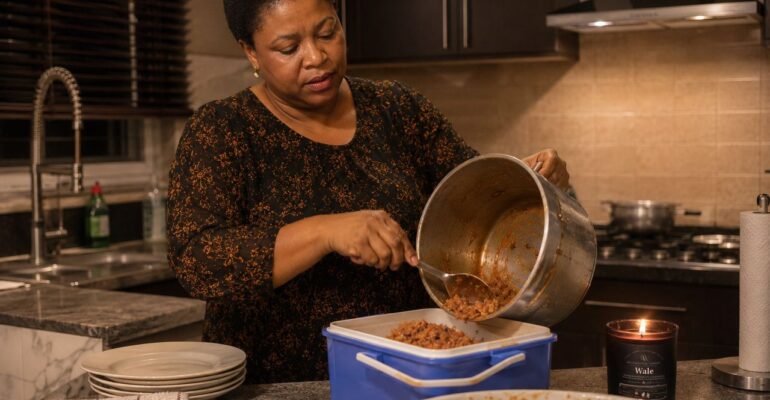
The kitchen was too small for the number of people standing in it.
Somebody had said something about Yetunde’s husband. The way he announces himself before he has fully entered a room.
And she laughed.
Not the laugh she keeps for other people’s stories. The other one. The one that comes up from somewhere lower and arrives before she has agreed to it.
It was in the room before she could shape it.
Across the counter, Folake looked over. Not surprised. Pleased, almost. As though she had been waiting for that particular sound and had begun to wonder where it went.
The light had gone before any of them arrived. The generator next door was talking for the whole street. Someone propped the back door open for air that did not come.
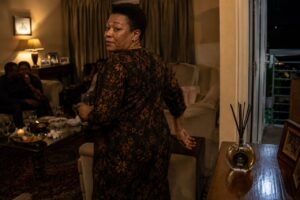
She had not planned to stay this long. She had sat in go-slow (traffic)for an hour on the way, telling herself she would greet people and leave. The flat smelled of pepper and candle wax and somebody’s perfume. Plates balanced on knees. Two children asleep across one armchair.
Ireti was telling them about the man. The one who sends good morning and then nothing else, all day. Should she answer? Should she leave it? What did it mean?
And before the room could gather its usual soft committee of opinions, she heard herself say, He is bored, not interested.
Flat. Out before she had checked it against anyone’s face.
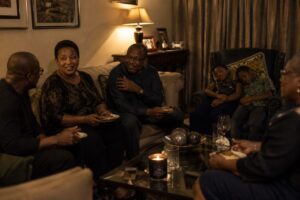
A small silence. Then Ireti laughed, because it was true, and because she had known it was true, and had only wanted someone to say it without filing down the edges first.
She had not filed it down. She had not even reached for the kinder version.
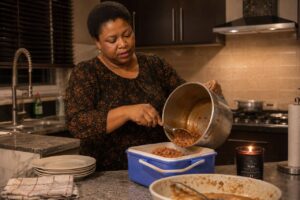
She noticed it afterwards. Not in the moment. The moment had already moved on. Later, scraping the last of the jollof into a cooler for someone to carry home, she thought: this was not the first time.
That even in the years when she watched every sentence to the door, something had kept slipping out behind her back.
The afternoon, she said, too loudly at a naming ceremony, that she did not want to hold the baby, and meant it, and everyone agreed to find it funny so it would not have to mean anything.
The evening, someone asked what she would do if money were not the question, and she answered before she could make it modest, that she would have left the job years ago, and felt the table go quiet around the size of it.
The time she told Obioma his plan would not last the year, and it did not, and he stopped speaking to her, and then, after a while, started again.
These were not the things she had protected. She had spent years trying to manage them more quietly.
They survived the managing.
The careful one was real. It had kept friendships; the blunt sentences would have ended. It had carried her through rooms that would not have held the other version. It still arrives first, most days. It is arriving even now, half a second behind the laugh, ready to account for it.

But underneath it, the whole time, something had refused to be fully smoothed.
Not louder than the carefulness. Older than it. There before it ever learned to be careful.
She put the lid on the cooler. Someone called her name from the balcony.
She went. Both of them went.
The one who would have weighed the words on the way out. And the one who had already spoken, and stayed.